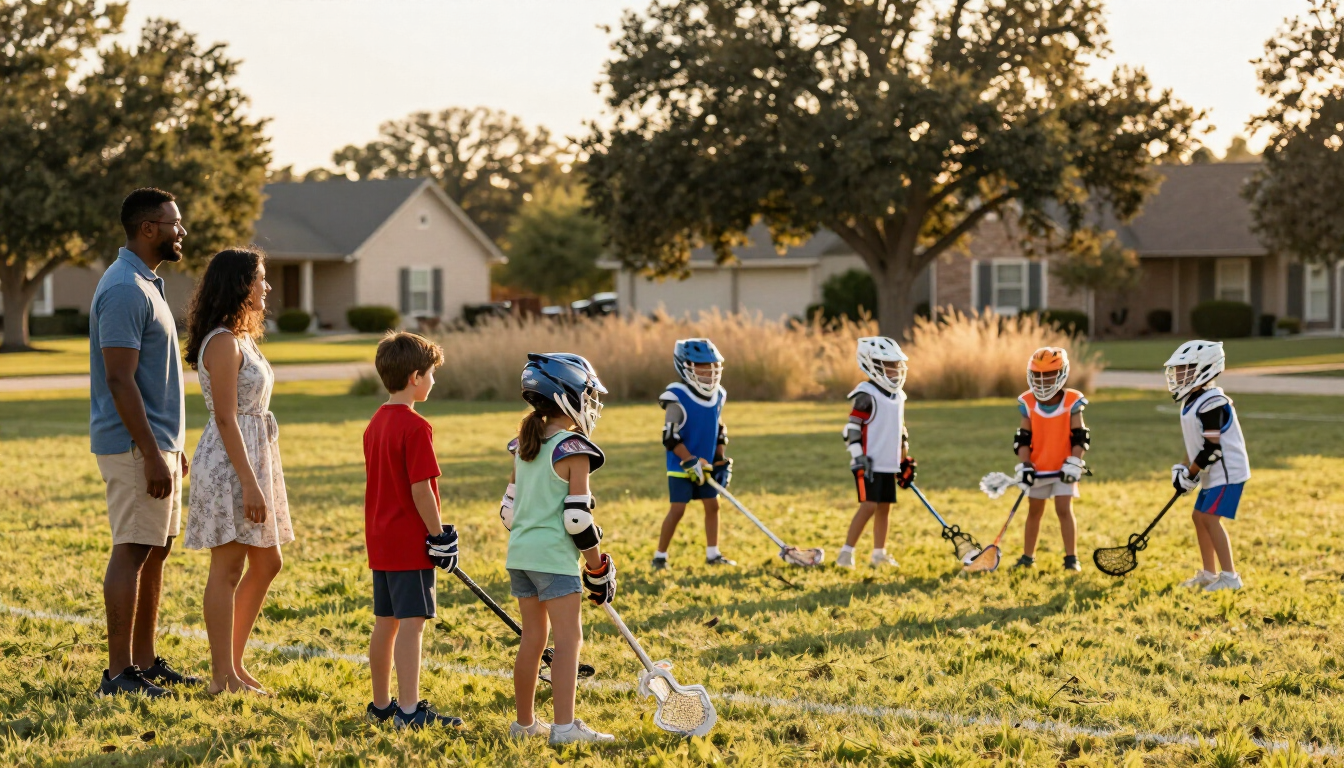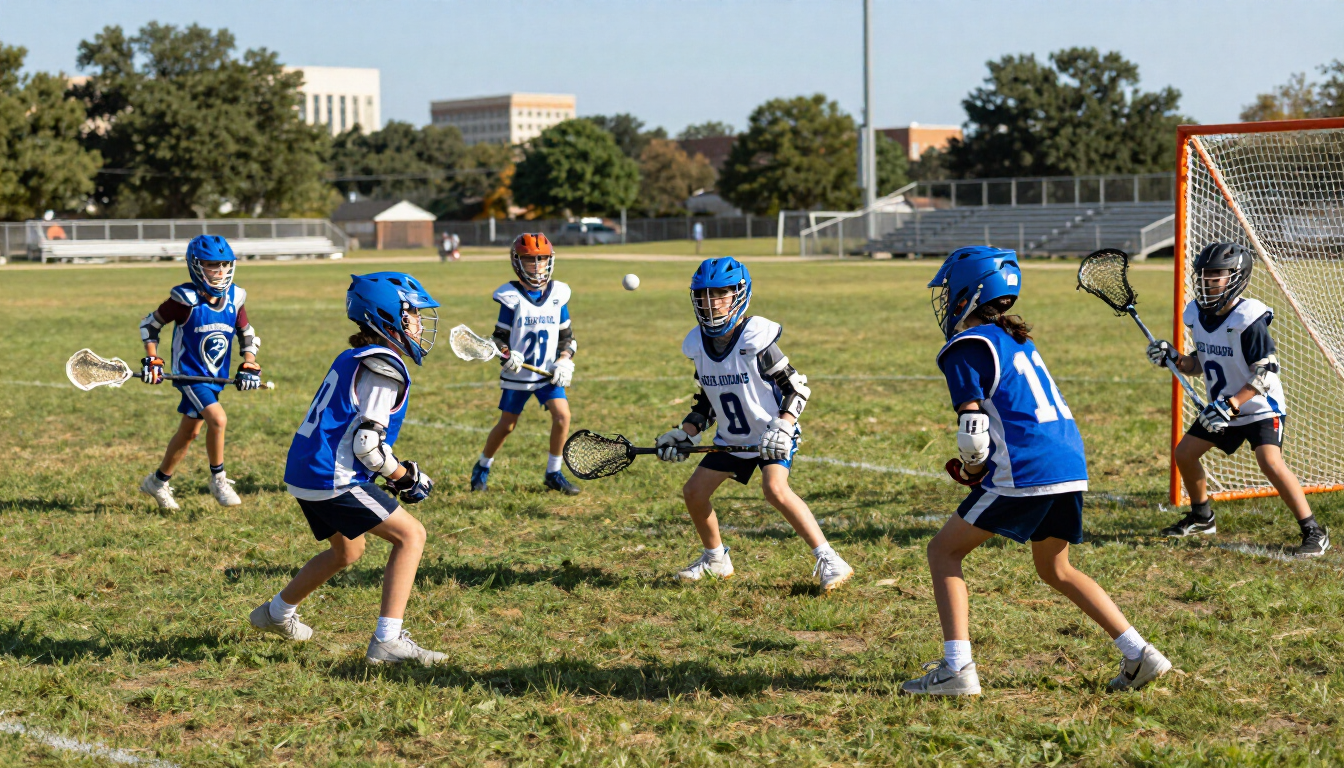


Beginner lacrosse skills for kids start with five fundamentals: passing, catching, scooping, cradling, and moving safely with the stick. K-8 players can build confidence by practicing each skill slowly, using soft hands, balanced footwork, and short activities that make learning fun.
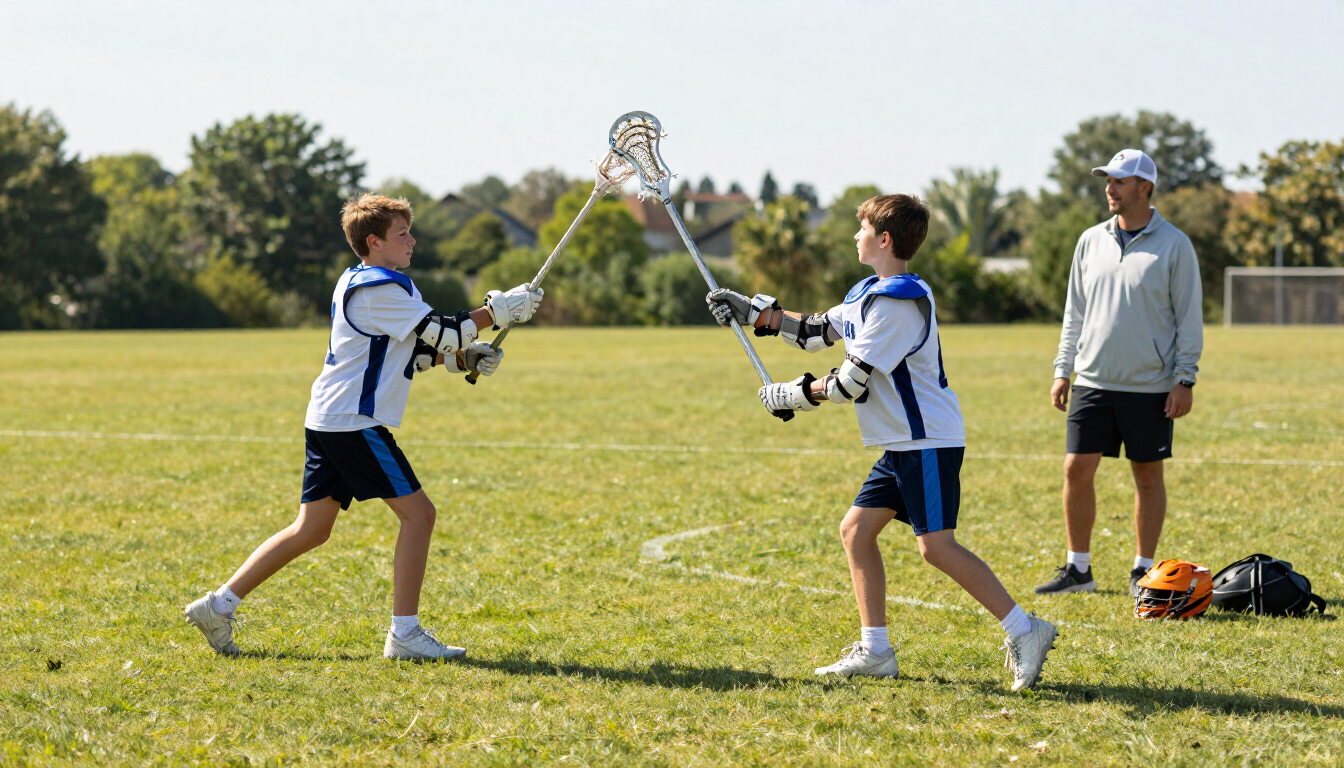
What are the most important beginner lacrosse skills?
The best starting point is consistent repetition without pressure. Focus on one skill at a time, then combine them through simple games.
- Passing: Hold the stick with two hands, point the front shoulder toward the target, and push the top hand while pulling with the bottom hand.
- Catching: Keep the stick head relaxed and give slightly as the ball arrives. Watch the ball into the pocket rather than reaching stiffly.
- Scooping: Bend the knees, lower the stick head to the ground, and move through the ball. Players should scoop forward—not stop directly over it.
- Cradling: Use a gentle wrist motion to keep the ball secure while walking or jogging. Start slowly before adding speed.
- Moving safely: Keep the stick controlled, look up regularly, and practice changing direction with space around other players.
How can kids improve lacrosse passing and catching?
Start close together—about five to eight yards apart. Complete ten accurate passes, then take one step backward. If passes become wild, move closer again.
Try these coaching cues:
- “Point your front shoulder.”
- “Show a target with your hands.”
- “Soft hands when you catch.”
- “Step toward your teammate.”
Accuracy matters more than power for beginners. Parents can make this a five-minute backyard routine using a clear target, such as a teammate’s chest or a marked square.
A simple scooping and cradling practice
Place several balls on the grass. Have players jog toward each ball, scoop through it, cradle for five steps, and place it in a bucket or pass to a partner. This builds ground-ball confidence while introducing game movement.
For cradling, begin with the dominant hand and two hands on the stick. Once the ball feels secure, practice switching hands while walking. Keep the stick near the body and avoid large swinging motions.
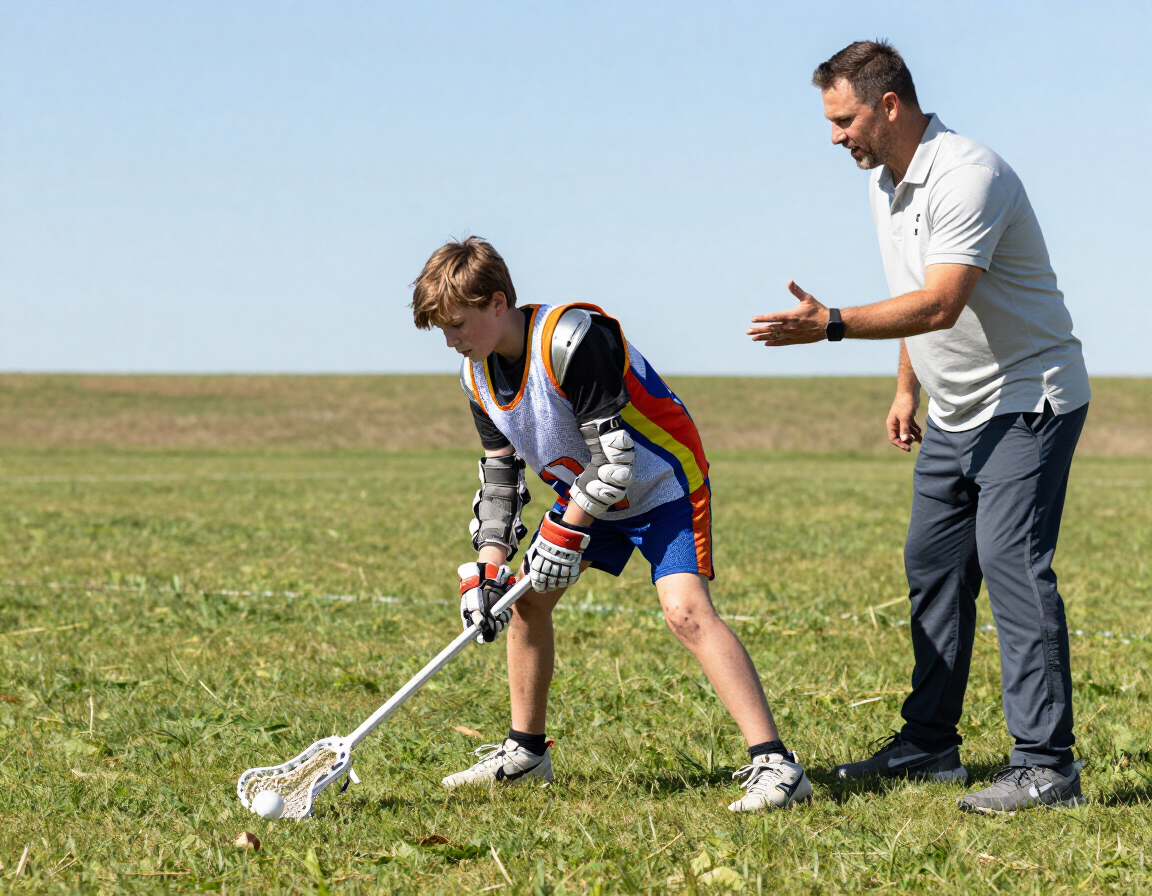
What should a beginner lacrosse practice include?
A short, repeatable session works well for K-8 athletes:
- 5 minutes: Dynamic movement and stick familiarization
- 10 minutes: Passing and catching in pairs
- 10 minutes: Scooping and cradling
- 10 minutes: A small-sided game or relay
- 5 minutes: Review, encouragement, and stretching
Beginner checklist
Before moving to more advanced drills, a player should be able to:
- Catch several gentle passes in a row
- Pass toward a teammate’s body
- Scoop a stationary ground ball while moving
- Cradle while walking or jogging
- Keep the stick controlled around others
What should kids learn next?
Once these fundamentals feel comfortable, add dodging, defensive footwork, shooting technique, and small-sided decision-making. Review the Rules page so families understand the game’s basic expectations and safe play habits.
The best beginner lacrosse skills practice is short, positive, and consistent. Start with passing, catching, scooping, cradling, and controlled movement; use simple games to keep kids engaged; and increase difficulty gradually. Families in North Austin and Round Rock can build confidence by practicing a few minutes at a time, then joining a welcoming local program. Focus on progress and enjoyment first—strong fundamentals will follow.
Recent Posts